Looking for that authentic British sound for your creative project? Discover top-tier British voice actors for hire , all pre-screened for quality and delivery. Perfect for commercials, narration, and more. Use our online platform to hire British voiceover artists and get secure payments and fast, professional voice over delivery.
Voice Crafters represents some of the finest British voice actors on the planet! Looking to hire one of our 100% pre-screened talent? Listen to the samples below and invite voiceover artists to quote for your project. Then simply ...
Hire British Voice Actors Online
Voice Crafters represents some of the finest British voice actors on the planet! Looking to hire one of our 100% pre-screened talent? Listen to the samples below and invite voiceover artists to quote for your project. Then simply hire your talent of choice and fund the project. Your payment will be held securely till the job is done. Get your recording and release payment when happy. Learn more →
Hire British Voice Actors Online
Voice Crafters represents some of the finest British voice actors on the planet! Looking t...
Hire British Voice Actors Online
Voice Crafters represents some of the finest British voice actors on the planet! Looking to hire one of our 100% pre-screened talent? Listen to the samples below and invite voiceover artists to quote for your project. Then simply hire your talent of choice and fund the project. Your payment will be held securely till the job is done. Get your recording and release payment when happy. Learn more →
We’ve been working with Voice Crafters since 2012 on various IVR, commercial and corporate projects. They have a huge database with excellent voice artists, are very professional and at fair rates. We are happy to know them and look forward to the next 5 years!
Mike D.
English (British)
United Kingdom
local time
(1)
Top Rated
My name is Mike; I am a British male voice-over artist and voice actor. I bring a versatile, characterful, and...
Dynamic
Versatile
Natural
Starting at $100
Step 1
Invite to Project
Listen to samples and invite voice actors to audition and quote for your project.
Step 2
Hire Talent
Hire your selected talent, fund project and communicate via our message board.
Step 3
Release Funds
Approve the recording and release funds for the talent when happy.
Get The Best British Voice Over Services at Voice Crafters
Whether you’re looking for an Oxford accent, Cockney, Midlands, or Geordie – we have them all!
Whatever the project – we have the perfect voice for you.
All our voice over artists are trained professionals with years of commercial experience behind them. We know – because we pre-screen every single talent.
Post your project today, and hire a voiceover artist from our huge database, or for more substantial projects requiring hands-on management, ask us to take care of it for you.
We can handle post-production tasks like sync-to-picture, sound effects and mixing as well as embedding subtitles and rendering your audio and/or video to any format!
Have questions about voice over prices or anything else? Please feel absolutely free to contact us for more help and recommendations!
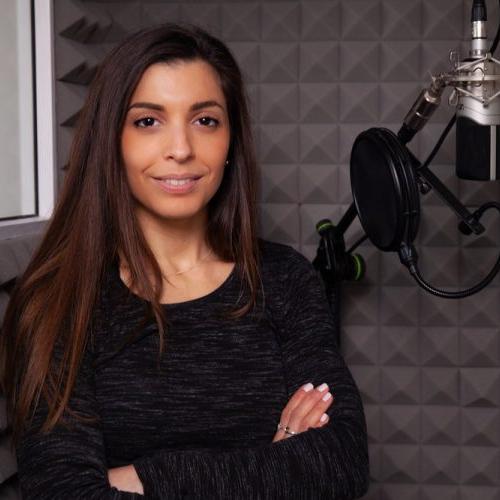
British Voice Over Talent Alexia K.
British voice overs: what you need to know
British English, sometimes referred to as the Queen’s English, is the common language of the United Kingdom. It’s spoken by 59.4 million people or 98% of the population.
The UK includes Scotland, Wales, England and Northern Ireland. The UK also has 14 overseas territories, including Gibraltar, the Falkland Islands and part of Antarctica. It’s also home to 14 other indigenous languages, including Welsh, Scottish Gaelic and Irish Gaelic. And many immigrant languages, including Polish, Punjabi and Gujarati.
Did you know:
Did you know? Welsh is the only de jure official language in the UK. But English is the de facto language of everyday life.
Language History
English has been shaped by the people who invaded Britain. Its early origins lie with Anglo-Saxon settlers who arrived in the 5th to 7th centuries AD. In the 8th and 9th centuries, the influence of conquering Vikings from Scandinavia led to much lexical borrowing and grammatical simplification. It’s typically the one-syllable words that are the oldest, such as dirt, berserk and cake. And after the Norman conquest in 10666, many Norman and French loanwords entered the language. In fact, 30% of English words have French origins.
Ever wondered why English spelling is so irregular? We’re still largely using the spelling of the Middle English period, even though the pronunciation of the words has changed. And the high level of loanwords adds up to a high level of spelling variation.
During the Renaissance era, loanwords skyrocketed again. This time from Latin and Ancient Greek, as well as other European languages, such as French, German and Dutch. Modern English came into being by the late 17th century – just in time to be exported to other countries through British colonization.
Close Relations
British English is an Anglo-Saxon language and a member of the Germanic family. It’s influenced by languages around the world, including those from the Commonwealth.
Did you know:
Did you know? William Shakespeare invented over 1700 words, many of which we still use today. They range from fashionable to dauntless and equivocal.
Accents and Voice Over Tips
Queen Elizabeth’s accent is known as received pronunciation. As the name suggests, it’s an accent that you study, rather than learn from your parents. Up until the 1960s, all broadcasters and many actors were required to adopt it. Since then, there has since been a swing to less formal tones and towards regional accents.
Slang and word usage varies from region to region. However, accents (as opposed to dialect) are mostly mutually intelligible. Surveys regularly show the Welsh and Scottish accents to be the most popular.
Words per minute
The average speaking rate for English is 150 words per minute. However, we advise you to always consider the target audience and project purpose. The younger the audience and the denser the text, the more your voice actor should slow down.
This entertaining animated video was voiced by Paul B.
Paul is a full-time voiceover artist with 20 years of experience. His voice is often described as conversational, natural, warm, reassuring, energetic, trustworthy, friendly, and relatable.
Paul has voiced for clients the likes of Lavazza, Miele, BBC, ITV, Hormann, Danone, Lufthansa, AIG, HSBC, Manchester City Council, and many others.
British English voice over for Cadent
This friendly and informational video for Cadent UK was voiced by Sara B.
Sara is a professional voiceover artist who has much experience in ADR work and has voiced for brands such as NHS, Wire FM, Heart FM, and BBC, to name a few.
British English voice over for eToro
This comical voice over was recorded by veteran British voice over artist Paul D.
Paul is a British voice actor with over 20 years’ experience.
Paul’s turnaround is very fast, usually within a day and if the project is urgent, he can usually supply the audio within the hour.
FAQ
What makes a British voice actor different from an American one?
The British accent carries different audience associations. British voices, particularly Received Pronunciation (RP) or a neutral London accent, are linked with authority, sophistication, and heritage. American voices tend to sound more approachable for mass-market content. Many clients choose British talent for luxury brands, historical documentaries, or international projects that need a voice clearly distinct from the American norm.
What's the difference between British voice over and UK voice over?
In practice, the terms describe the same thing, but there is a difference if you want to be specific. British voiceover usually refers to accents from England such as RP, Estuary English, Mancunian, Scouse, or Brummie. UK voice-over is broader and includes Scottish, Welsh, and Northern Irish talent. If the regional origin matters, specify it in your brief rather than using either term generically.
What is Received Pronunciation and when should I use it?
Received Pronunciation (RP), sometimes called the Queen’s English or BBC English, is a non-regional, prestige British accent. It was the broadcast standard in the UK until roughly the 1970s and remains common in formal contexts, luxury advertising, and international corporate communications. It reads as polished and authoritative without belonging to any particular British region. Use it when you need a British voice that works across all UK audiences.
Which British accents does Voice Crafters offer?
Our talent base covers the full range of native UK accents. RP and contemporary neutral British, London and Estuary English, Scottish (both Edinburgh standard and broader regional), Welsh, Northern Irish, and English regional accents from the North, Midlands, and West Country are all available. If your project needs a specific regional sound, filter by accent or contact our team.
Can I use a British accent for content aimed at international audiences?
Yes, and clients do this often. Neutral British accents are widely used in e-learning, corporate training, and B2B content distributed globally because they sound clear, professional, and recognizably distinct without carrying the cultural associations of American English. They work especially well across Europe, the Middle East, and Commonwealth markets.
How do British voice over rates compare to American rates?
Rates are broadly comparable for equivalent project types. Usage rights, script length, and distribution scope drive pricing more than the nationality of the talent. However, it’s worth mentioning that American talent relies on the GVAA rate guide, while British talent often refers to Equity rates. British talent on Voice Crafters quotes based on your specific brief. Post your project to receive accurate quotes from the talent you shortlist.
How many people speak British English?
English is spoken by roughly 1.5 billion people worldwide, with around 59 million native speakers in the UK itself. The UK also has 14 overseas territories where English is widely used or is the official language. As a voice over choice, British English reaches any English-comprehending audience globally, not only UK-based listeners.
Can British voice actors do multiple accents within one project?
Some can, but be cautious about asking any voice actor to perform accents outside their native range. A genuine Glaswegian voice will sound different from a southern English actor attempting Scottish, and experienced clients notice. Voice Crafters lists the native accent of each talent in their profile. If your project needs multiple distinct British accents, cast separate talent for each.