Curious how to become a voice actor? Discover the essential skills, equipment, and strategies needed to launch a successful voice over career – from building your home studio to landing voiceover jobs and maximizing your earning potential in today’s competitive market.
Affordable home recording equipment has made it easier to start a voice acting career, but it has also increased competition.
Professional voice actors need vocal skills, investment in recording equipment, and the willingness to keep training and developing their experience through auditions.
Quality equipment and technical knowledge are essential to building a career as a voice actor.
Voice actors can work across a wide range of industries, including animation and video games, e-learning, audiobooks, and marketing.
Landing regular work depends on professional self-marketing and networking as much as talent.
*Updated August 2026
Becoming a voice actor requires developing your vocal skills, learning the craft, investing in the right equipment, and building up consistent experience.
Today, thanks to advances in technology, it’s now easier than ever to get into voice acting.
With affordable recording equipment and the ability to set up a home studio in the spare room, the industry offers greater accessibility.
However, accessibility doesn’t mean the pathway is easy.
As production costs have fallen and more voice artists enter the market, greater competition as well as opportunity has increased, to the extent that it’s not unusual to find hundreds of actors applying for the same single voiceover job.
This means that while having a good voice is obviously critical for success as a voice artist, you’ll need more than that to establish yourself as a professional.
By the end, you’ll have a better idea of what it takes to become a voice talent and whether this field is right for you.
Is it easy to develop a career as a voice actor?
No. Developing a career as a voice actor is not considered easy because it is highly competitive and requires a lot of time and investment before you typically see results.
You won’t automatically find yourself recording blockbuster movies and cashing million-dollar checks, so you’ll need to set realistic expectations going in.
As a career, it isn’t for everyone, and you should carefully consider your interest in this field before investing too much time or money.
That said, there are both pros and cons to be had in becoming part of this industry:
Pros
Freelancers today have plenty of low-cost opportunities to start a business from anywhere. Voice acting is the perfect field for anyone tired of working in an office. While most recording sessions used to happen at dedicated studios, the majority of voice actors now record from home. Professionals often have a home studio as well as a travel kit for recording on the road.
Voice acting gives you the opportunity to control your career path and broaden your horizons by working on different materials. Of course, this doesn’t mean that it’s easy, just that you have the chance to chart your own course. You won’t be accountable to any bosses or managers other than the clients you choose to work with.
Revenue growth can be tough in the early stages, but clients often return to the same artist for multiple projects. Over time, you’ll start to generate more regular income without having to constantly reach out to new clients.
The voiceover community is incredibly supportive, helping newer voice actors learn the ropes and get their careers on track.
Tips from more experienced voice over artists can be a valuable resource when you’re starting out.
Cons
It takes a substantial amount of time and effort to get a voice acting career off the ground. You’ll need to train, audition, interview, build a recording space, and do everything else that comes with changing career paths.
Professional voice recording equipment can be expensive for aspiring voice actors, and there’s no way to know whether your investment will pay off in advance.
As we said earlier, the voice over market is highly saturated (to say the least). With tens or even hundreds of actors competing for the same project, you’ll need a thick skin for rejection. No matter how skilled you are, you’ll need to stay positive through the process of recording auditions and understanding that they may be thrown out anyway.
We mentioned the benefits of remote work, but working from home isn’t always easy. Telecommuters often have trouble separating their work and personal lives, and some people find it more difficult to stay focused.
You’ll also have to find other ways to stay socially active, especially if you’re used to seeing coworkers throughout the week.
Of course, whether you’d enjoy voice acting ultimately comes down to your preferences and priorities.
The obstacles we’ve mentioned are very real, but most voice actors wouldn’t switch to any other profession.
How much money do voice actors make?
On average, working voice actors can make anything between $100 and $100,000+ annually, depending on their experience level and marketability. Some voice actors make well over 7 figures
For instance, if you’re a main character in a show like The Simpsons, you could easily earn millions of dollars per year.
On the other hand, some voice actors work part-time and take other jobs on the side.
Furthermore, even full-time voice actors often work on a contract basis, meaning that they’re paid for projects rather than receiving a full-time salary.
The point is that there’s no “normal” way to be a voice actor; everyone’s experience is different.
While clients will pay more for established professionals, new voice actors often struggle to develop their portfolio and get the work they want.
This will gradually become easier as you develop your skills, build your network, and spend more time in the industry.
It’s also important to think about the cost of equipment, coaching, and anything else you’ll need to start your new career.
You have to earn that back just to break even, and that’s without considering the time you’ll invest.
You should take your entire financial and career situation into account before putting your valuable time or money into voice acting (or any other career change).
At the same time, you shouldn’t accept unfair rates to get jobs more quickly.
Some clients try to take advantage of novice voice actors (and other freelancers) by paying less than a fair wage.
Never take a job that doesn’t offer reasonable pay.
They may seem like stepping stones to better work, but the reality is that these cut-rate clients won’t have many networking or other opportunities to offer (that’s why they’re cut-rate).
Use industry-standard rate guides like the GVAA guide (US) and Gravy for the Brain (UK) to come up with estimates for your voiceover projects.
What equipment do I need to set myself up as a voice actor?
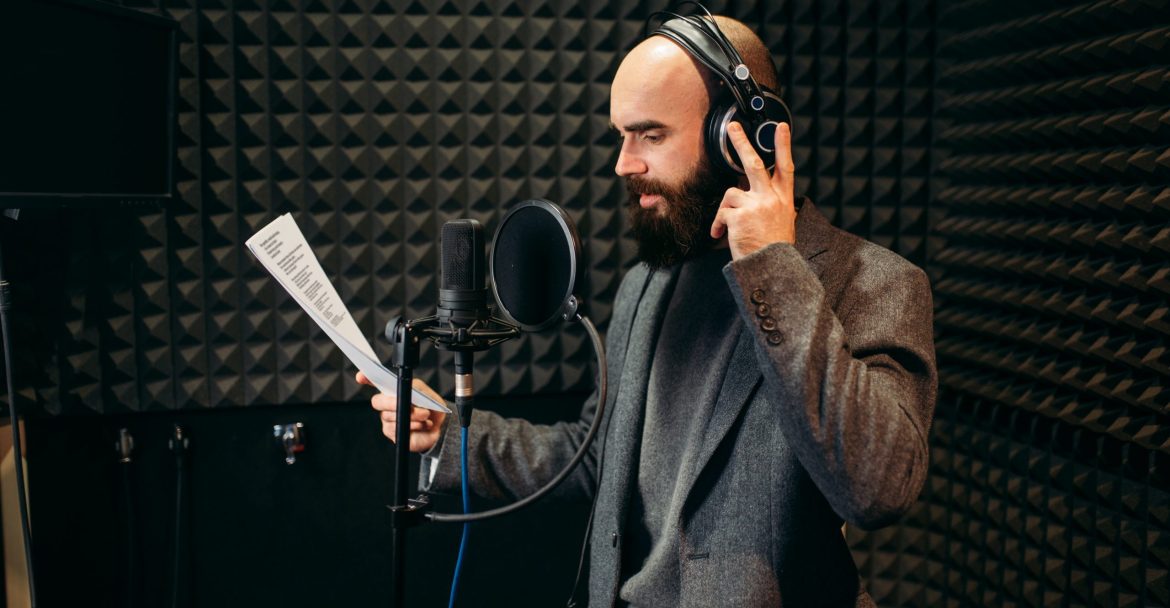
The basic equipment you’ll need to set yourself up as a voice actor includes a quality microphone, studio headphones, a reliable laptop or tablet, and digital audio workstation (DAW) software.
You won’t need to spend thousands of dollars on your starter setup, but you should be willing to cough up for decent equipment.
After all, there’s no sense in shelling out money on something you’ll have to upgrade in a few months.
Alongside your microphone and headphones, it’s a good idea to invest in a stand, pop filter, shock mount, and sound interface.
You should also acoustically treat your recording environment to minimize reverb and delay.
You can buy starter recording bundles on Amazon for cheap and produce great audio recordings in no time at all.
Even if you cover surfaces with comforters or duvets, it can help. It won’t be as good as a professional set-up, but it’s a start.
Of course, if you can pay a little more for top-quality equipment, then do it.
A dedicated vocal booth, for example, is one of the best investments you can make in your career as a voiceover artist.
In addition to physical equipment, you’ll also need software to create and edit recordings.
Attention to detail is what separates professional voice actors from enthusiasts or hobbyists.
A few of the most popular recording platforms include Pro Tools, Studio One, Logic, Audacity, and Adobe Audition.
Both Audacity and GarageBand (Mac) are free, making them great for voice actors who are just getting into the industry.
Even if you’re relatively new, you still need to avoid any imperfections that could give the client a negative impression.
What vocal skills do I need to be a voice actor?
The main vocal skills you need to be a voice actor are a clear, engaging voice, good vocal stamina, and the ability to quickly adapt your tone and pace to suit a script you might just have been handed!
1. Clarity
Clarity is the most fundamental skill for aspiring voice actors.
Nothing else matters if your listeners can’t make out what you’re saying.
While different roles call for different styles, effective voice actors can maintain clarity in any context.
Note that the standard is much higher for voice overs than it is for everyday life.
Your normal speaking style will sound surprisingly unclear in a voice recording.
Don’t be discouraged if it takes some time to improve your clarity.
It sounds simple, but speaking clearly can be surprisingly difficult in practice.
2. Consistency
Recording a line a single time is one thing, but going through multiple takes can be tricky.
You may be asked to re-record certain sections to improve on particular areas without losing the force of your original recording.
You may also encounter projects where the client changed some of the wording in the copy.
In those cases, you’ll need the vocal stamina to punch in the new takes while maintaining the same energy, inflection, and pace.
Minimizing variation between takes is a key skill for both conventional actors and voice over artists.
If you’re having trouble with consistency, try recording the same lines multiple times while practicing.
You may also be interested in working with a voice coach who can help you develop your talent.
3. Cold Reading
It’s common for clients to change copy multiple times prior to the session.
You may even find yourself being asked to read a script that you’ve never seen before.
The ability to quickly review a script and find the right tone is important for any voice over artist.
Of course, part of this is simply developing more confidence.
It may feel overwhelming at first, but you’ll gradually get a feel for how to match your reading style to a new script.
You’ll gradually gain confidence as you spend more time in the industry and improve your voice acting skills.
What technical skills do I need to be a successful voice actor?
To be a successful voice actor, you need technical skills that allow you to produce high-quality recordings from your own studio.
While having a strong voice is important, professional voice acting also requires an understanding of recording techniques, audio equipment, and basic editing.
Microphone placement, for example, is a seemingly simple point that can be surprisingly tough to perfect.
Experts often recommend recording from roughly six inches to one foot away.
You should experiment with different placements and angles to determine what works best for you.
Processing and editing your recordings is another important facet of voice acting.
A good pop filter can help minimize these harsh sounds during the recording.
In the old days, when voice actors worked at external studios, this was usually done by dedicated sound editors.
Additionally, sound engineers know how to apply EQ and compression for a more professional final product.
Today, voice actors are expected to edit recordings themselves unless the client specifies otherwise.
Your job as a voice actor is to deliver audio that is edited, processed, and ready for final production.
Is voice training recommended if you want to be a professional voice actor?
Yes. Voice training is recommended as an important part of developing the skills and confidence needed to be a professional voice actor.
Even if you have a perfect voice, becoming a successful voice actor requires learning how to develop your style, control your delivery, and use that voice to interpret scripts and connect with an audience.
Working with a professional voice coach is one of the best ways to hone these skills, especially when you’re starting out.
An experienced voice coach will pick up on your tendencies and raw talent.
They’ll be able to help you recognize and improve your weaknesses while supporting your unique career goals.
One-on-one education can be expensive, but it’s hard to overestimate the impact a qualified coach can have on your voice acting career.
Many professional voice actors continue training even after they’ve developed successful careers
Ongoing education is the best way to keep your skills sharp over time.
Even the best voiceover talent has room for improvement.
Your acting coach may also be able to help with other areas of your career such as marketing, networking, and audio production.
With that being said, private voice lessons aren’t the only option if you’re wondering how to become a voice actor.
Acting classes, conferences, and voice acting forums and events are incredibly valuable resources.
You may also learn valuable skills through a conventional acting class, which will also give you the opportunity to network with actors in a different niche.
While vocal skills are obviously fundamental to long-term success as a voiceover artist, pitching yourself to clients is just as important.
What fields do voice actors work in?
Hear voices against your actual script
Free custom auditions from professional voice talent — no commitment.
Voice actors work in many fields, including animation, advertising, corporate communications, audiobooks and guides, e-learning, and IVR.
That said, when most people hear the words “voice acting,” they think of cartoon, movie, and video game characters as well as the actors who played them.
The allure of these fields brings many new voice over artists into the industry.
Of course, it helps that famous voice actors are often paid millions of dollars for each project.
But you can find voice over work in a wide range of other forms of media, and you don’t have to be a dramatic or comedic actor to enjoy success as a voice talent.
Of course, recording educational materials is very different from recording a movie or TV show.
For example, educational voice actors need to be able to narrate long-form content in a consistent tone without getting dry or monotonous.
2. Commercials and Marketing
Many companies hire voice actors for commercials, explainer videos, and other promotional content.
Some larger businesses also work with professional voice actors to produce training videos and other internal materials.
Companies generally prefer to collaborate with the same actor over time, so these opportunities often lead to long-term working relationships.
Explainer videos are typically short demonstrations or tutorials designed to showcase a brand’s product or service.
They can appear anywhere from websites to marketing emails and social media pages.
In the example below, Jane A. goes over Sanebox’s features to show the product’s key benefits
3. Entertainment
Of course, many voice actors work on entertainment projects including video games, podcasts, and audiobooks.
Overall, there are opportunities out there for every kind of voice actor.
The right way to look for jobs as a voice over artist depends on the kinds of projects you’re interested in.
What can you do to land voice acting jobs?
To land voice acting jobs, you need to build your skills, promote your work, and put yourself in front of potential clients as often as possible.
Applying and interviewing for voice acting roles is a big step if it’s your first time working in the industry.
Novice voice actors can get discouraged when they have trouble landing the gigs they’re interested in, but persistence is key to success in any career path.
Don’t feel bad if you’re struggling to gain any momentum.
There’s no shortcut to becoming a successful voice actor. Just get your name out there, improve your skills, and develop your portfolio.
That includes social media pages plus a professional website with some good samples.
Your demo reel will give you a chance to display any successful projects you’ve worked on.
It will only become more impressive as you get more experience.
Don’t worry if you only have a few personal projects to display at first.
Remember to get the client’s permission before using the project in your portfolio.
You may also consider working with an agency like Voice Crafters to connect with high-quality jobs that may be more difficult to find on your own.
If you’re new to the field, consider taking it slowly rather than jumping into the deep end.
Part-time projects are an easy way to start out, and you won’t have to quit your day job or give up your existing income.
Think carefully before entering any exclusive agreements that could cut you off from other sources of work.
Aspiring voice actors often compare themselves to established actors to help potential clients understand their work.
However, while having a role model is never a bad thing, you should avoid marketing yourself based on someone else (…even if you DO sound like Morgan Freeman or Marilyn Monroe!)
You’ll need a unique brand of your own in order to position yourself for long-term success.
Finally, take some time to interact with other voice actors, especially ones with more experience.
Networking is one of the most reliable ways to learn, find new projects, and expand your horizons.
Actors in your network will send you job opportunities that don’t fit their own skills.
Don’t underestimate how much work you could get from other voice talent who can vouch for your skills.
When you do get a job by means of a referral, make sure to give 110%.
Remember that the person who referred you has their reputation on the line just as much as you do, if not more.
As in any other field, networking should be a consistent part of your career plan.
Even if you don’t need any work right now, you should still be actively reaching out to voice actors and others in the industry.
What are some ways to improve auditioning for voiceover jobs?
To improve your voiceover auditions, make sure you’re auditioning regularly and focusing on delivering a performance that’s aligned with the client’s brief. Also, make sure that you choose suitable projects for you
Clients often audition ten or more voice actors for the same job, which means that you need to nail your audition.
So, let’s explore these three ways to improve in more detail.
1. Keep Auditioning
Simply auditioning more often is a great thing you can do to improve your skills.
Every audition gives you an opportunity to learn how to refine your technique and interpret different types of scripts.
Auditions also help you build your confidence simply because each one involves engaging with different businesses and clients.
Getting jobs as a voice actor takes time, so even if you don’t get the job, keep working at it, treating each audition as additional training.
2. Focus on the Right Projects
While auditioning is good practice in its own, you shouldn’t waste time or effort on jobs that don’t match your skill set.
You’ll probably have trouble convincing the hiring manager that you’re the right fit if you don’t believe it yourself.
Focus on building your reputation in the niches you’re interested in.
3. Read a Small Part of the Script
If a client posted a full script for the audition, don’t record the entire thing.
In general, casting directors will only listen to a short section of each audition.
Recording anything longer is a waste of time and energy you could be putting into another audition.
In most cases, 20 or 30 seconds is more than enough.
This also allows you to record the part of the script you feel most comfortable with.
You’ll have more time to work on your material if you limit the audition to a small section.
Feel free to jump straight into the script rather than stating your name or the part you’re auditioning for.
We highly recommend adding a watermark to short auditions, especially when working with a client you aren’t familiar with.
This will prevent them from using your audition commercially.
Final words
Building a successful career as a voice actor doesn’t happen overnight.
Still, it’s a more realistic goal than you might think. And thanks to improvements in technology and the profusion of online voice agencies and marketplaces, it’s more accessible than ever in 2026.
These tips will help you get the equipment you need, improve your skills through training and education, and connect with the voice acting jobs you’re looking for.
Did you like this article? Have any questions? Please feel free to comment below.
Frequently Asked Questions
Can anyone become a voice actor?
Anyone can become a voice actor but, as the industry is highly competitve, not everyone will succeed in maintaining an ongoing, successful voice acting career.
This takes time and effort put into training, investing in the right equipment, and building up consistent experience.
Is voice acting well paid?
Voice acting can be very well-paying depending on the type of voice project and level of experience.
Current data suggests that the average annual income for a US-based voice actor is around $77.5K.
Beginners typically earn much less, though, as they’re still building their skills and experience.
What skills do I need to become a successful voice actor?
Successful voice actors need a combination of voice acting and technical skills.
These include clear speech, vocal consistency, cold reading skills, and the ability to record and edit professional-quality audio.
Do I need voice training to become a voice actor?
Yes, it’s a good idea to have voice training, especially when starting out. A professional voice coach can help you improve your vocal technique, script interpretation, delivery, and confidence.
Many experienced voice actors continue training throughout their careers to keep developing their skills.
What types of jobs can voice actors do?
Voice actors do many different types of jobs, including voicing animation, video games, commercials, audiobooks, e-learning, corporate training, and podcasts.
You would usually want to add a “beep”, or some other audio signature at odd times throughout the voice over, in a separate track. You want to make she that track’s volume isn’t too high so that it doesn’t distract from the voice over, but just enough for it to be audible enough to prevent it from being used commercially.
Jairo Alonso Orozco ParraJan 30, 2024
Muchas gracias por la información fue bastante precisa.
Voice CraftersJan 30, 2024
Gracias a usted!
Get a PRO voice over
In 3 simple steps
1
Get Free Proposals
Post your project or choose voice actors to audition and send you proposals.
2
Hire Talent
Hire your favorite talent, fund the project and communicate via the message board.
3
Release Payment
Approve the recording and release your payment to the talent when happy.







4 Comments
How do you add a watermark?
You would usually want to add a “beep”, or some other audio signature at odd times throughout the voice over, in a separate track. You want to make she that track’s volume isn’t too high so that it doesn’t distract from the voice over, but just enough for it to be audible enough to prevent it from being used commercially.
Muchas gracias por la información fue bastante precisa.
Gracias a usted!